Explore four named creature designs from Cygnus Cross’s development archive, with the original concept artwork and the details that make each silhouette distinctive.
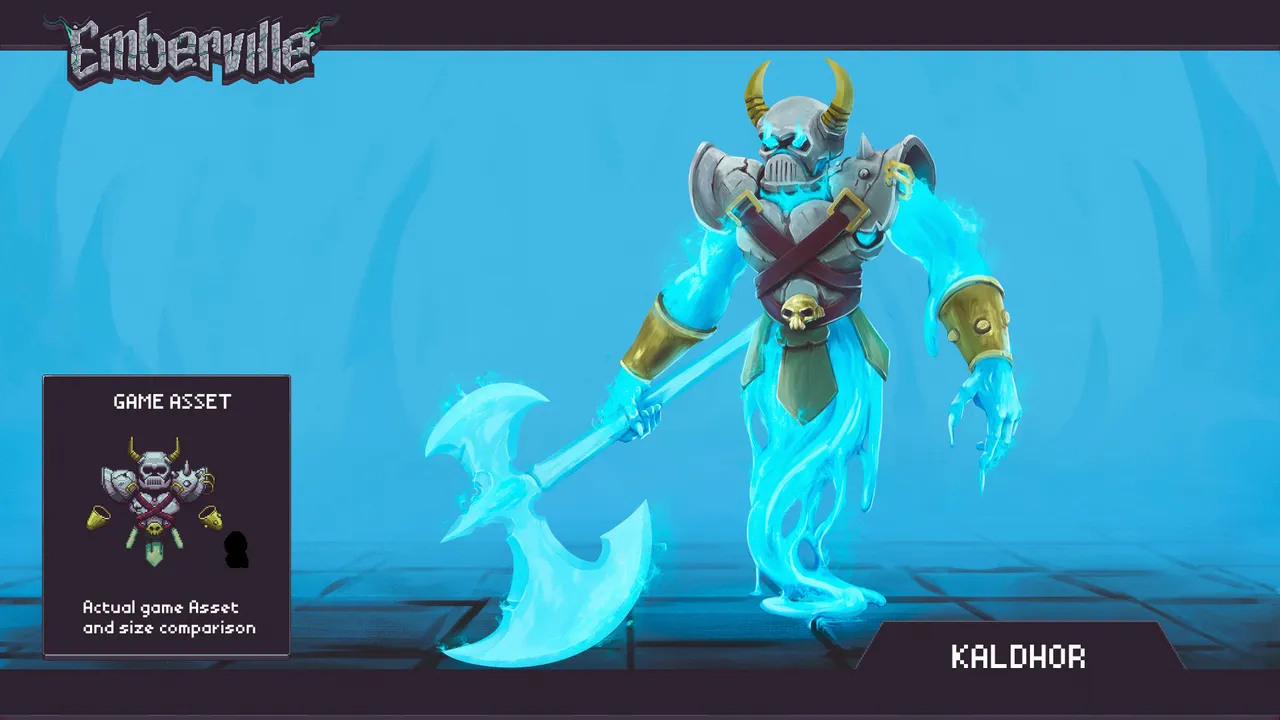
Kaldhor is presented as a horned, armored figure with a bright blue, translucent body. Gold-edged armor pieces stand out against that spectral silhouette, while the oversized double-ended axe gives the design its dominant diagonal. The smaller inset is labeled as a game asset and provides a useful comparison with the larger painted concept. Notice how the luminous body, floating-looking armor and broad weapon remain recognizable at different scales. Those are observations about the published artwork, not evidence of an ice damage type, an attack sequence or an in-game weakness. The original label identifies the design as Kaldhor.
Development concept. Current appearance, encounter location and combat statistics remain unconfirmed.
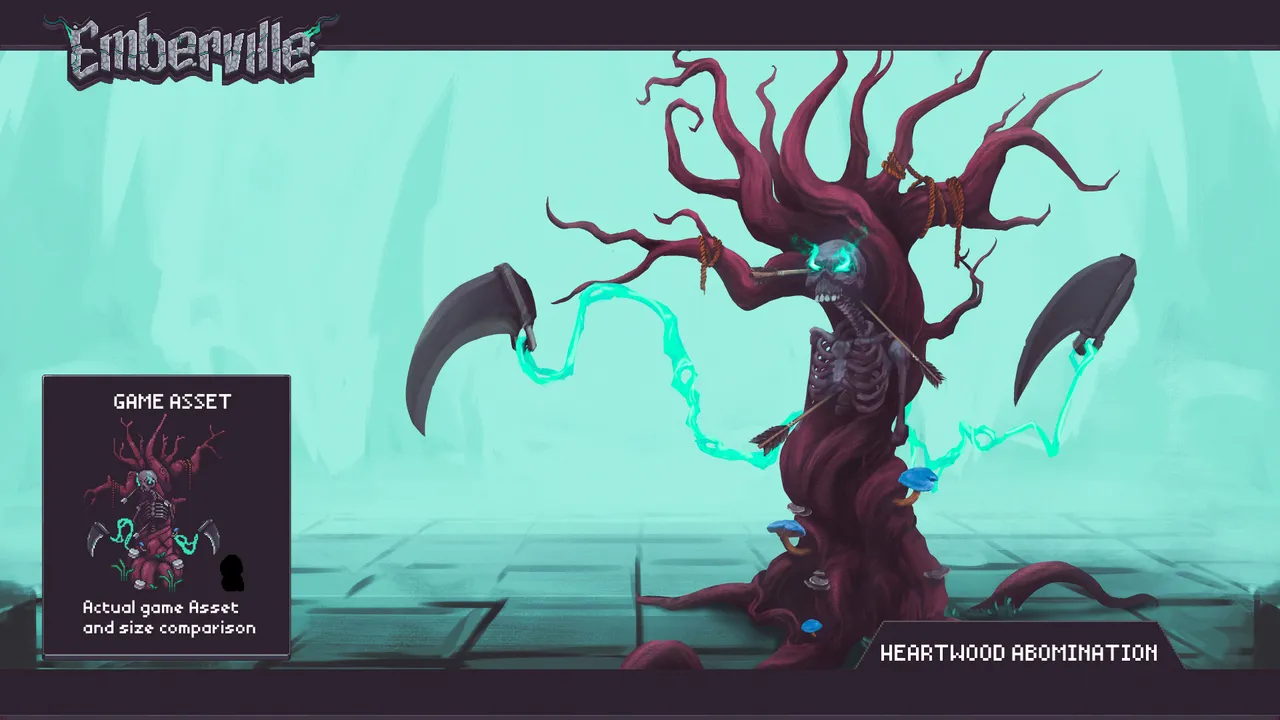
Heartwood Abomination combines a tree-like body and branching crown with a skeletal face and torso. Curved blades extend the arms, while bright links and highlights cut across the darker bark. The large branches give the upper silhouette a spread that contrasts with the narrow trunk below. An inset labeled as a game asset places the design beside a scale reference, showing how its branching outline translates into a smaller rendering. The image makes the botanical and skeletal motifs visible, but it does not establish poison attacks, a forest spawn point or a particular resistance. Its identity comes from the artwork’s own Heartwood Abomination label.
Development concept. Current appearance, encounter location and combat statistics remain unconfirmed.
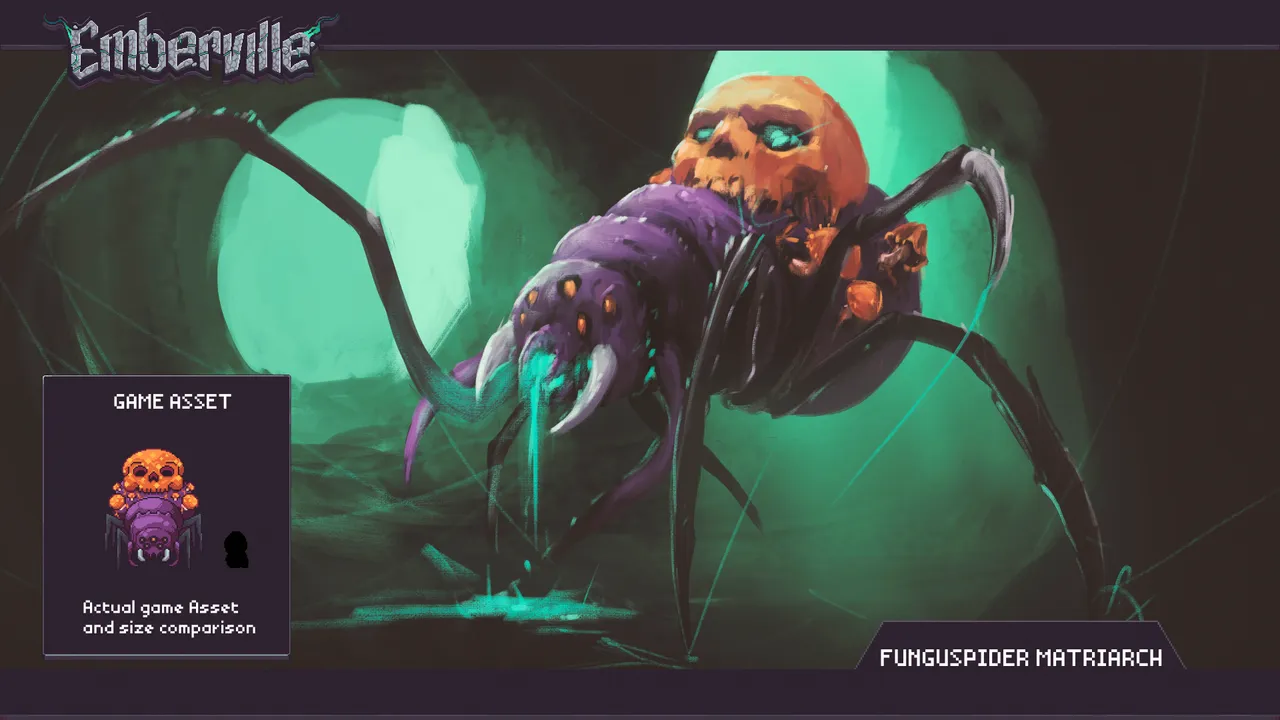
Funguspider Matriarch is a purple, spider-like creature with long angular legs and orange growths across its body. A skull-like orange form sits high in the composition, giving the design a second focal point above the smaller face. The contrast between the dark legs, purple body and warm growths helps separate the creature from the green background. The inset labeled as a game asset includes a scale comparison and a compact rendering of those same broad features. The name and visible fungal imagery are part of the concept; they do not confirm a poison status effect, summoned offspring, a spawn location or a particular encounter phase.
Development concept. Current appearance, encounter location and combat statistics remain unconfirmed.
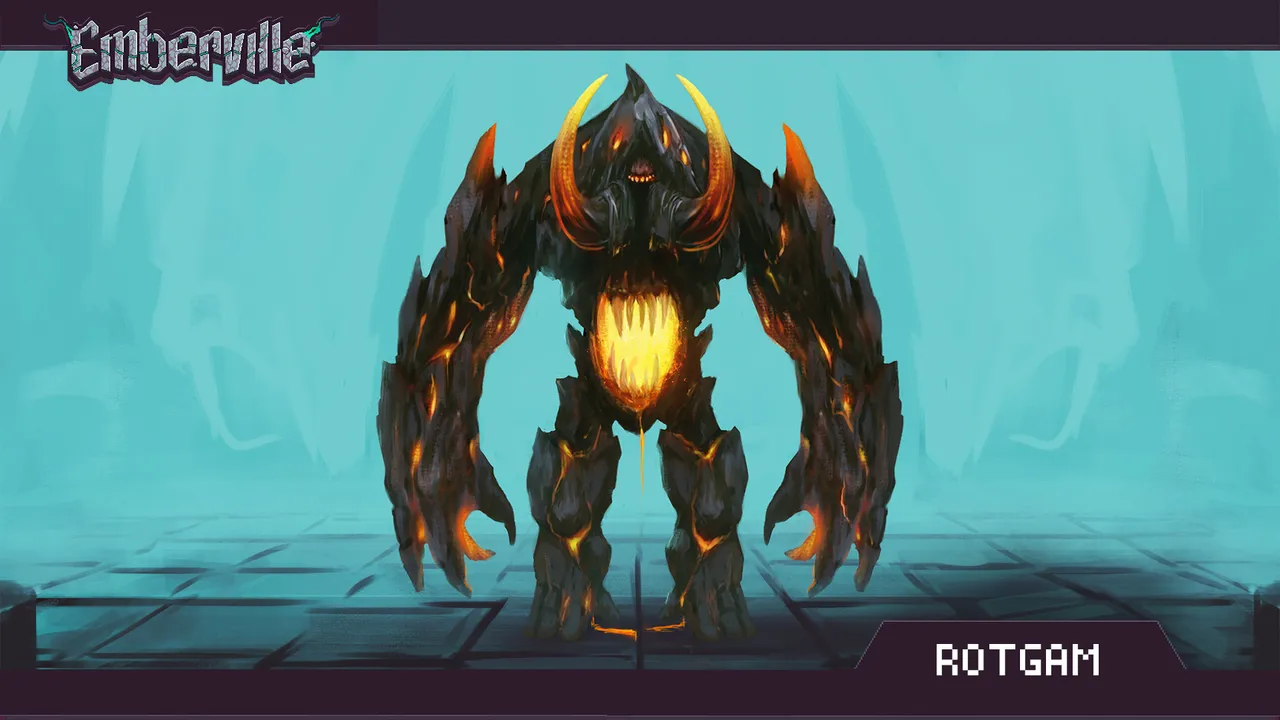
Rotgam’s concept uses dark armor-like forms edged with orange light, a broad upper body and long, heavy arms. A glowing mouth or opening dominates the center of the figure, while the horned outline and tapered lower silhouette give the design a different balance from Kaldhor’s luminous body. The November 24 announcement introduces Rotgam as the Fallen Hero of the Scavengers and presents him alongside a Scavenger. The image shown here preserves the labeled Rotgam design. Its fire-like colors are visual observations, not a confirmed damage element, and the announcement does not provide a launch encounter route or measured combat statistics.
Development concept. Current appearance, encounter location and combat statistics remain unconfirmed.
These four designs were published in developer announcements in November 2023. The artwork labels each creature and, in several images, includes a smaller game-asset rendering for scale or comparison. The illustrations offer a useful look at the design language of the Vitromotus: armored figures, botanical forms, spider-like anatomy and sharply contrasting colors. They are historical development material, so the gallery does not claim a complete Early Access roster.
From a silhouette to a fighting style
The gallery describes visible shapes, equipment and color. It does not turn a large weapon into a claimed attack pattern or a blue body into an elemental weakness. For the announced player-facing systems, read weapons and combinations or classes and inherited skills. Those explain the combat framework; a boss strategy needs observations of the actual encounter.
Where do these creatures appear?
The source announcements establish identities and design context, but not reproducible routes, spawn conditions or launch-version drop tables. Visit the world guide for the setting and exploration systems. When encounter evidence becomes available, the useful next addition is a build-specific record with location, behavior and rewards, attached to the relevant identity rather than guessed from concept art.