
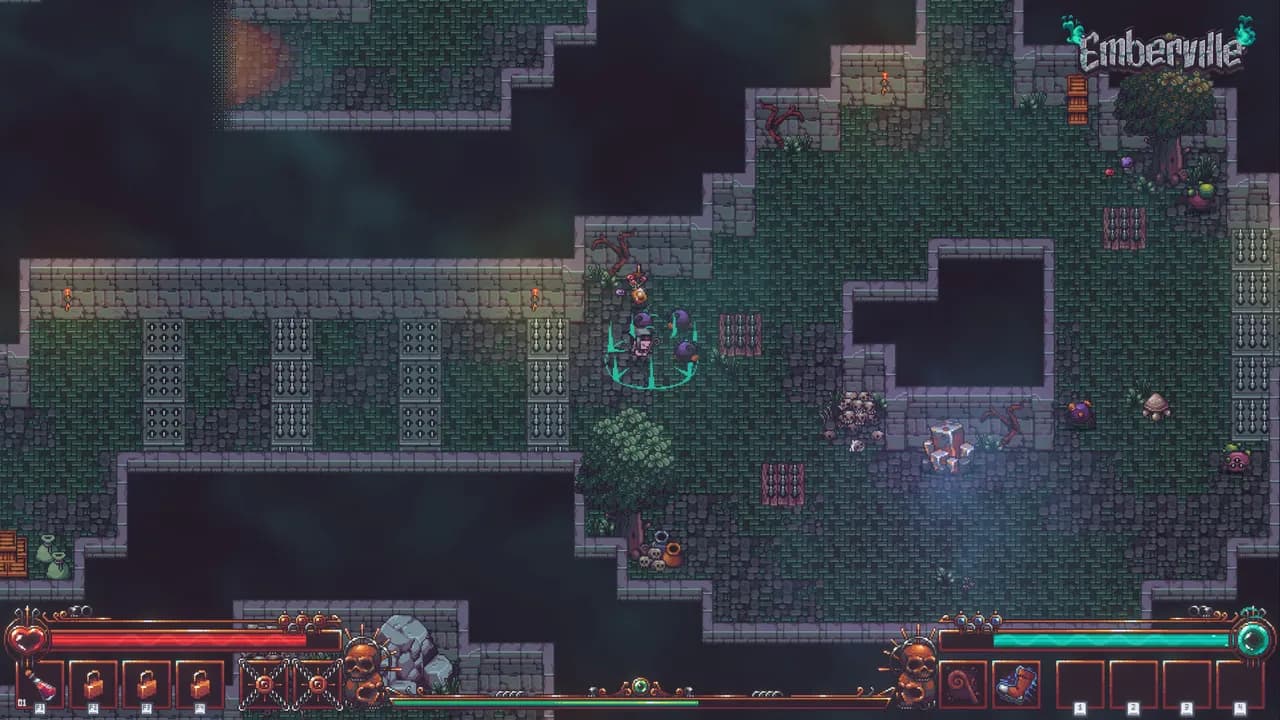
The prison beneath the adventure
The Vitromotus is a vast magical prison. Steam describes it as a place originally built to confine the unwanted members of an earlier society, now transformed by arrogance, corruption and the passage of time. Your character wakes there with clouded memories and a desire to escape. The developer’s website introduces a mysterious luminous companion called the Memento, who accompanies the journey. That premise gives exploration a personal direction: finding a way forward also means learning what this world is, who remains inside it and why escape is so difficult.
Exploration brings people home
The prison is not only a collection of hostile rooms. People from the ruined town of Emberville are trapped within it, and rescuing them ties exploration to the town’s recovery. The developers describe residents sharing skills, secrets, dreams and quests as you help them rebuild. A discovery can therefore matter beyond the immediate encounter: it may connect the journey with new relationships and activities back in town. Follow town rebuilding for that relationship and the estate for the personal space within the settlement.
A visual guide to the environments
The store names forgotten tunnels, ruins, survivors’ settlements and threatening environments. The promotional screenshots also show sharp visual contrasts: enclosed stone corridors, open sandy ground, pools, trees and buildings. These images are useful for understanding Emberville’s atmosphere and variety. They are not a set of labeled regional maps, so the gallery below describes what is visible without assigning invented area names or fixed routes.
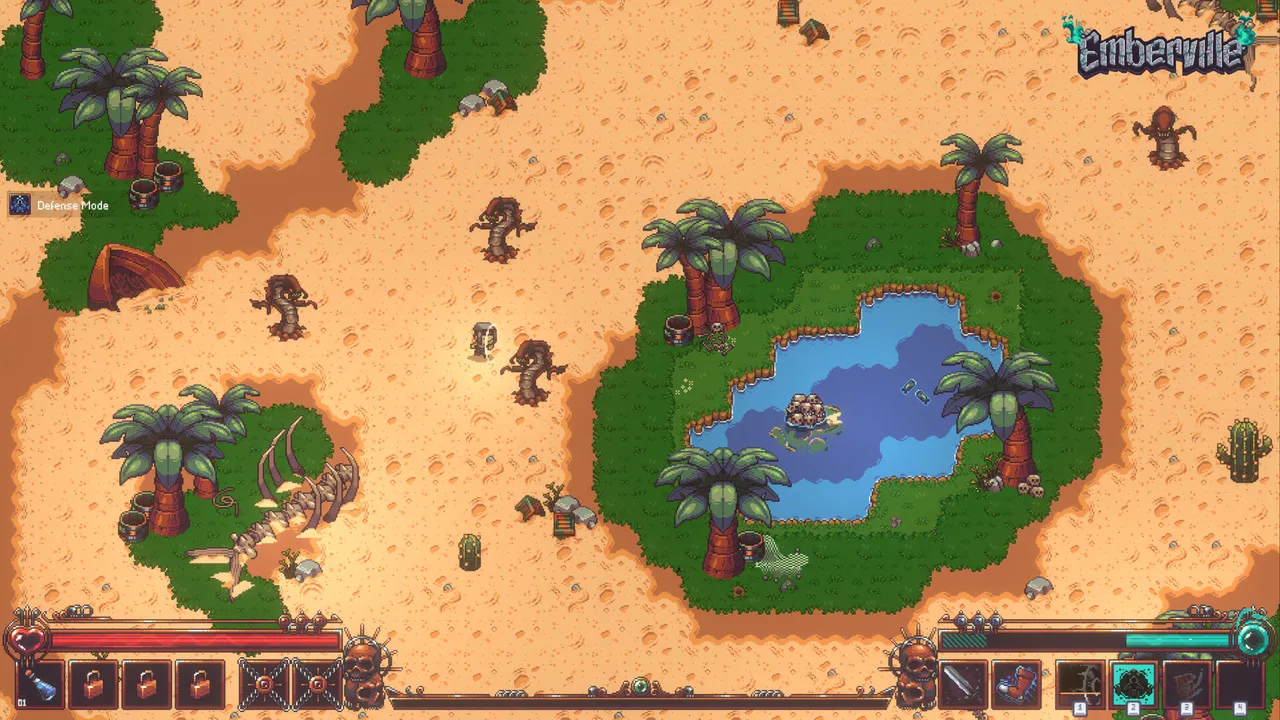
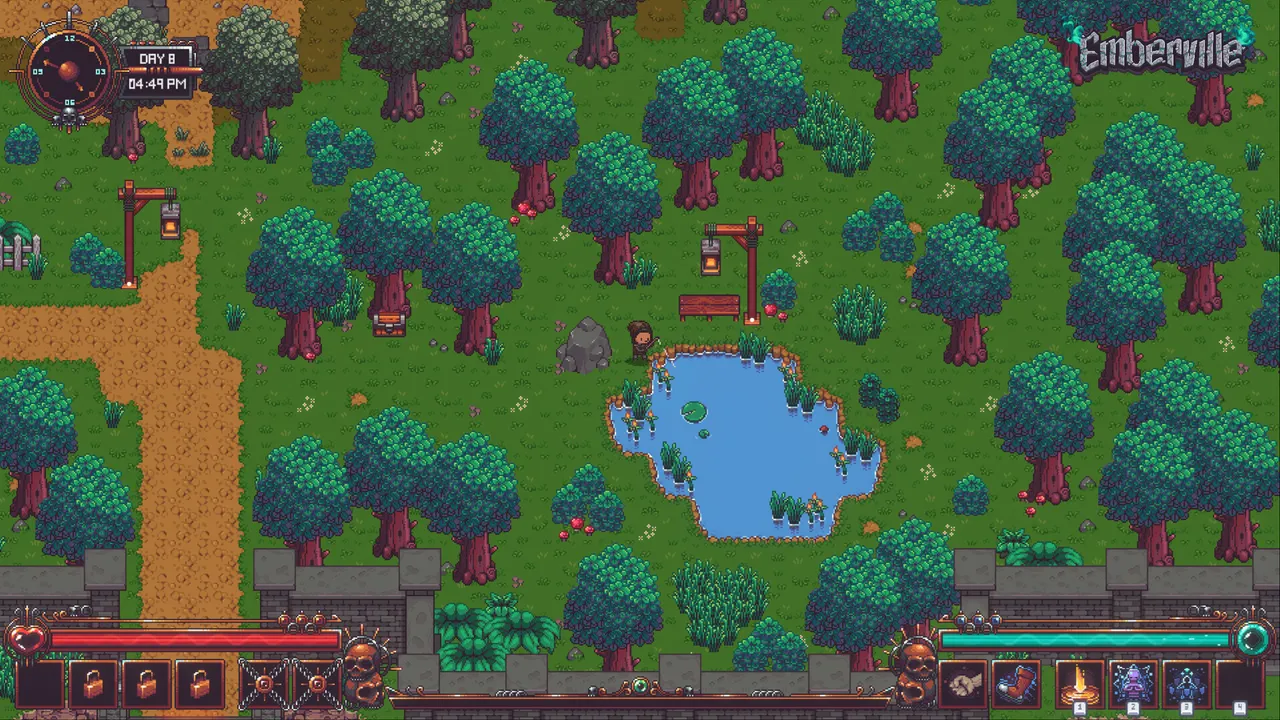
Why a map may change between games
The official press fact sheet describes a procedurally generated world containing generated levels, events, biomes, enemies and treasures. The older development journal likewise discusses changing layouts. Treat these as descriptions of the planned exploration system. They explain why a screenshot should not be turned into a universal sequence of rooms or a guaranteed coordinate. When hands-on route guides become possible, landmarks, objectives, game version and the relevant save conditions will be more useful than assuming that every player starts with an identical map.
Kymia and the world’s inhabitants
Steam introduces kymia as a mysterious energy born from emotions that brings people trapped in the Vitromotus back to life. Its influence has also reshaped the prison, creating unusual biomes and creatures. The same description hints that not every creature is simply what it first appears to be. This is story context for the world’s variety, not a measured explanation of death penalties or enemy behavior. For a closer look at the developer’s creature designs, visit the official enemy concept archive.
Choose your next trail
Use your question to decide where to go next. The world guide explains the setting and the role of exploration; the connected guides follow what an adventure can bring back.
- People and their stories → town rebuilding, quests and teachings described by the developers.
- Materials and supplies → gathering purposes and the crafting systems they support.
- New combat options → weapon proficiency, class unlocking and inherited skills.
- Creature designs → named historical concept art with the original announcement dates.
World layout and location guides
The world map overview explains the developer’s procedural-generation description and distinguishes the dungeon, town and estate. Future location entries need an official name, identifiable landmarks, version and access conditions. This guide does not promise that a location in one save occupies the same coordinates in another.
Sources & scope
- Emberville on Steam ↗
- Cygnus Cross — Welcome to Emberville (development journal, May 30, 2025) ↗
- Official Steam description — checked October 3, 2026 ↗
- Cygnus Cross — Emberville official press fact sheet ↗
- Cygnus Cross — Welcome to Emberville ↗
Official-source overview · Historical development material. Sources checked 2026-10-06. Pre-release information; historical development descriptions are identified separately.